
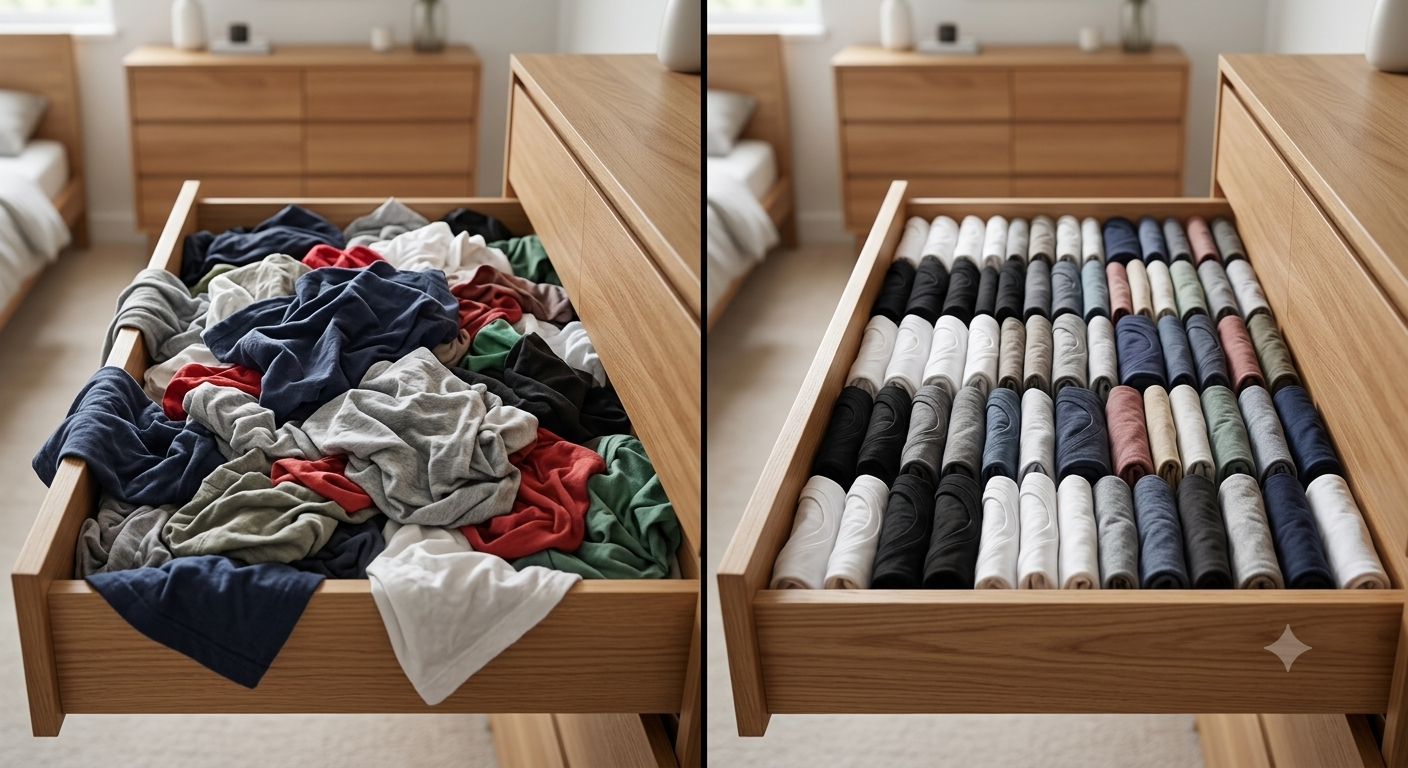
If folding laundry feels like a chore, you’re not alone. Fortunately, there’s a simple technique that can help you fold a T-shirt neatly in just a few seconds known as the 3-point method. This clever folding hack has become popular because it’s fast, easy to learn, and leaves your shirts looking tidy.
This post may contain affiliate links. As an Amazon Associate, I earn from qualifying purchases at no extra cost to you.
Whether you’re trying to speed up laundry day, keep your wardrobe organized, or simply impress your family with a neat trick, this guide will show you exactly how to master the 3-point method.
Why Learn to Fold a T-Shirt Quickly?
Learning a faster folding technique offers more benefits than you might think.
- Save time when folding large loads of laundry.
- Keep your wardrobe looking neat and organized.
- Reduce wrinkles by folding shirts properly.
- Make it easier to stack clothes in drawers or on shelves.
- Turn laundry into a quicker, less frustrating task.
Once you’ve practiced the technique a few times, you’ll likely find yourself reaching for it every time you wash clothes.
What Is the 3-Point T-Shirt Folding Method?
The 3-point method is a clever way of folding a T-shirt in one smooth motion. Instead of making several separate folds, you pinch three key points on the shirt, lift it, and complete the fold in seconds.
Although it looks impressive at first, it’s surprisingly easy once you understand where to place your hands.
The secret is identifying the correct three points before making the fold.
What You’ll Need
You don’t need any special equipment.
Simply gather:
- A clean T-shirt
- A flat surface such as a table, countertop, or bed
For best results, smooth out any wrinkles before you begin.
How to Fold a T-Shirt Quickly: Step-by-Step
Step 1: Lay the T-Shirt Flat
Place the T-shirt face up on a flat surface.
Smooth out any wrinkles so the fabric lies flat.
Position the shirt so the neckline is on your left if you’re right-handed (reverse this if you’re left-handed).
Step 2: Identify the Three Points
Imagine a line running down the middle of the shirt.
You’ll pinch three points:
- Point A: At the shoulder area.
- Point B: Right below Point A at the armpit area.
- Point C: near the bottom hem.
These three points are what make the folding method work.

Step 3: Pinch the First Two Points
Using one hand, pinch Point A.
With your other hand, pinch Point B.
Keep a firm grip on both points.
Step 4: Cross Your Hands
Without letting go, cross the hand holding Point B over the hand holding Point A and grab Point C.
This is the only part that feels unusual at first, but after a few tries it becomes second nature.
Step 5: Lift and Shake
Lift the shirt off the surface.
A gentle shake allows the fabric to fall neatly into place.
You’ll immediately notice that most of the folding has already happened.
Step 6: Finish the Fold
Lay the partially folded shirt back onto the surface.
Fold the remaining sleeve underneath or fold the shirt in half, depending on your preferred storage style.
That’s it!
Your T-shirt is neatly folded in just a few seconds.
Watch the Technique in Action
The 3-point method is much easier to understand once you see it demonstrated.
Watch the video below to follow each movement and practice along. After a few attempts, you’ll be able to fold a T-shirt quickly without thinking about the individual steps.
Common Mistakes Beginners Make
If the fold doesn’t work perfectly the first time, don’t worry. Most people make one of these common mistakes:
Grabbing the Wrong Points
Even a small difference in where you pinch the shirt can affect the final fold.
Take a moment to identify the correct positions before lifting.
Twisting the Shirt
Keep the fabric relatively flat as you lift.
Too much twisting can create wrinkles instead of clean folds.
Forgetting to Smooth the Shirt First
Wrinkles at the beginning often become bigger wrinkles at the end.
Spend a second flattening the shirt before starting.
Giving Up Too Soon
The first few attempts may feel awkward.
Most people become comfortable after just five to ten practice folds.
Tips to Fold Even Faster
Once you’ve mastered the basics, these tips can help you become even quicker.
- Practice with larger adult T-shirts before trying smaller sizes.
- Use a smooth, flat surface.
- Fold shirts immediately after drying to reduce wrinkles.
- Make folding part of your laundry routine rather than letting clothes pile up.
- Challenge yourself to improve your speed while maintaining neat folds.
With a little practice, many people can fold a shirt in under five seconds.
Frequently Asked Questions
Is the 3-point method difficult to learn?
Not at all. It may feel unusual during your first few attempts, but most people pick it up quickly after watching a demonstration and practicing a handful of times.
Does it work on all T-shirts?
Yes. The method works well on most short-sleeved T-shirts, including cotton, polyester, and blended fabrics.
Can children learn this method?
Older children and teenagers often enjoy learning it because it feels like a fun trick while teaching a useful life skill.
Is this the fastest way to fold a T-shirt?
For many people, yes. Once mastered, the 3-point method is one of the quickest and most efficient folding techniques for everyday laundry.
Are There Other Ways to Fold a T-Shirt?
Absolutely. Other popular techniques include the traditional fold, the Marie Kondo folding method for vertical drawer storage, and the military roll, which is ideal for travel and saving suitcase space.
Each method has its own advantages depending on your needs. In this guide, we’ve focused on the 3-point method because it’s one of the fastest techniques for everyday use and the one demonstrated in the accompanying video.

Recommended Tools for an Organized Wardrobe
Handheld Garment Steamer – Quickly remove wrinkles before wearing.
Clothes Folding Board – Create perfectly folded shirts every time.
Adjustable Drawer Dividers – Keep folded shirts neatly separated.
Fabric Storage Bins – Store seasonal or extra clothing.
Slim Velvet Hangers – Save closet space and prevent slipping.
Final Thoughts
A simple folding technique can make laundry feel far less time-consuming.
The 3-point method combines speed with neat results, making it an excellent skill for anyone who wants a more organized wardrobe without spending extra time folding clothes.
The first few attempts may require a little patience, but once you’ve mastered the movements, you’ll be folding T-shirts in seconds.
If you’re looking for a quick, practical life hack that genuinely saves time, this is one worth learning.
Leave a Reply