
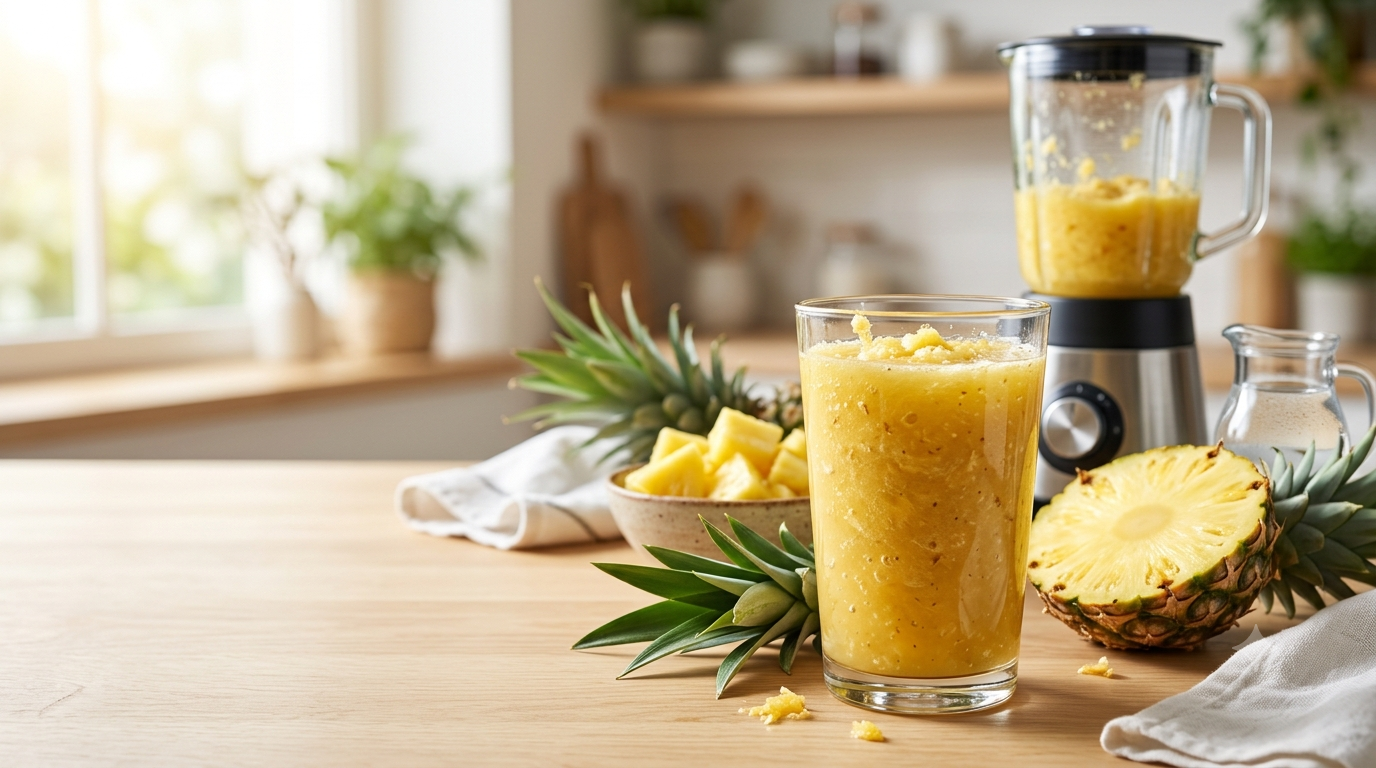
Learn how to make thick pineapple juice with the fiber left in for a natural way to support healthy digestion and relieve occasional constipation. Includes recipe, tips, and FAQs. Constipation is one of the most common digestive complaints, leaving many people feeling bloated, uncomfortable, and frustrated.
This post may contain affiliate links. As an Amazon Associate, I earn from qualifying purchases at no extra cost to you.
While there are many over-the-counter treatments available, sometimes the simplest solutions are already sitting in your kitchen. One natural remedy that’s gaining popularity is thick pineapple juice made with all the fiber intact. Unlike traditional juice that’s strained until it’s smooth, this version blends the entire pineapple flesh into a rich, smoothie-like drink so you get the fruit’s natural fiber—the part most people accidentally throw away.
In this guide, you’ll learn why this pineapple drink may help with occasional constipation, how to make it correctly, and a few tips to get the best results.
Why Fiber Matters for Constipation
Fiber is one of the most important nutrients for maintaining regular bowel movements.
There are two main types:
- Soluble fiber, which absorbs water and forms a gel-like consistency.
- Insoluble fiber, which adds bulk to stool and helps it move through your digestive system.
Many fruit juices remove most of the fiber during straining. While the juice still contains vitamins and natural sugars, it loses much of what makes fruit beneficial for digestion.
By blending pineapple without straining it, you’re keeping far more of the natural fiber.
Why Pineapple May Help
Pineapple contains several nutrients that support digestive health.
1. Natural Fiber
Keeping the pulp means you’re consuming more fiber than you would from regular pineapple juice.
Fiber helps:
- Promote regular bowel movements
- Add bulk to stool
- Support healthy gut bacteria
- Keep digestion moving
2. High Water Content
Pineapple is naturally rich in water.
When combined with adequate daily hydration, foods with high water content can help soften stool, making it easier to pass.
3. Bromelain
Pineapple contains an enzyme called bromelain, which helps break down proteins.
Although bromelain isn’t a cure for constipation, some people find that pineapple feels easier on the digestive system than other fruits.
PrintNatural High Fiber Pineapple Juice

This thick pineapple juice recipe blends fresh pineapple with the fiber left intact for a refreshing, high-fiber drink that supports healthy digestion. Unlike traditional strained juices, this homemade pineapple drink keeps the natural pulp for a more nutrient-rich option.
- Prep Time: 10 minutes
- Total Time: 10 minutes
- Yield: 2 Servings
- Category: Beverage
- Diet: Dairy-Free, Gluten-Free, Vegan
Ingredients
- 1 ripe pineapple
- ½–1 cup water
- Ice (optional)
Instructions
- Peel and chop the pineapple.
- Add the pineapple and water to a blender.
- Blend until smooth and thick.
- Do not strain—the fiber is what makes this recipe different.
- Pour into a glass and enjoy immediately.
Notes
Life School Tip: Drink with plenty of water and maintain a fiber-rich diet to support healthy digestion.
Optional Ingredients

If you enjoy experimenting, you can add:
- Fresh ginger
- Mint leaves
- Lemon juice
- A small cucumber
- A few chia seeds (for extra fiber)
These ingredients change the flavor while adding even more nutritional value.
Best Time to Drink It
Many people prefer drinking this juice:
- In the morning
- Between meals
- Alongside a balanced diet
- With plenty of water throughout the day
There isn’t strong evidence that a specific time of day works best, so consistency is usually more important.
Tips for Better Results
If you’re relying on natural methods to support regular digestion:
- Drink enough water every day.
- Eat plenty of fruits and vegetables.
- Include whole grains in your diet.
- Stay physically active.
- Don’t ignore the urge to use the bathroom.
The pineapple drink works best as part of an overall healthy lifestyle rather than a stand-alone solution.
Recommended Kitchen Tools
Who Should Be Careful?
Although pineapple is healthy for most people, you should speak with a healthcare professional if you:
- Have persistent constipation lasting more than a few weeks.
- Experience severe abdominal pain.
- Notice blood in your stool.
- Have unexplained weight loss.
- Have diabetes and need to monitor fruit sugar intake.
- Are allergic to pineapple.
Natural remedies are helpful for occasional constipation but shouldn’t replace medical advice when symptoms are severe or ongoing.
Frequently Asked Questions
Is pineapple juice good for constipation?
Pineapple may support healthy digestion, especially when blended without straining so that the fiber remains. Fiber and adequate hydration both play important roles in regular bowel movements.
Is thick pineapple juice better than strained juice?
For constipation, thick blended pineapple is generally a better option because it retains much more of the fruit’s natural fiber.
How often can I drink it?
Most healthy adults can enjoy pineapple as part of a balanced diet. Moderation is important because pineapple also contains natural sugars.
Can children drink this juice?
Yes, in age-appropriate portions, but avoid giving excessive amounts. If constipation is persistent in children, consult a pediatrician.
Final Thoughts
If you’re looking for a simple, natural way to support healthy digestion, thick pineapple juice with the fiber left in is worth trying. It’s refreshing, easy to prepare, and allows you to enjoy more of the fruit’s natural goodness instead of pouring it down the drain.
Remember that no single food is a miracle cure. The best approach to preventing constipation combines a fiber-rich diet, enough water, regular exercise, and healthy daily habits.
A glass of thick pineapple juice can be one tasty piece of that routine.