
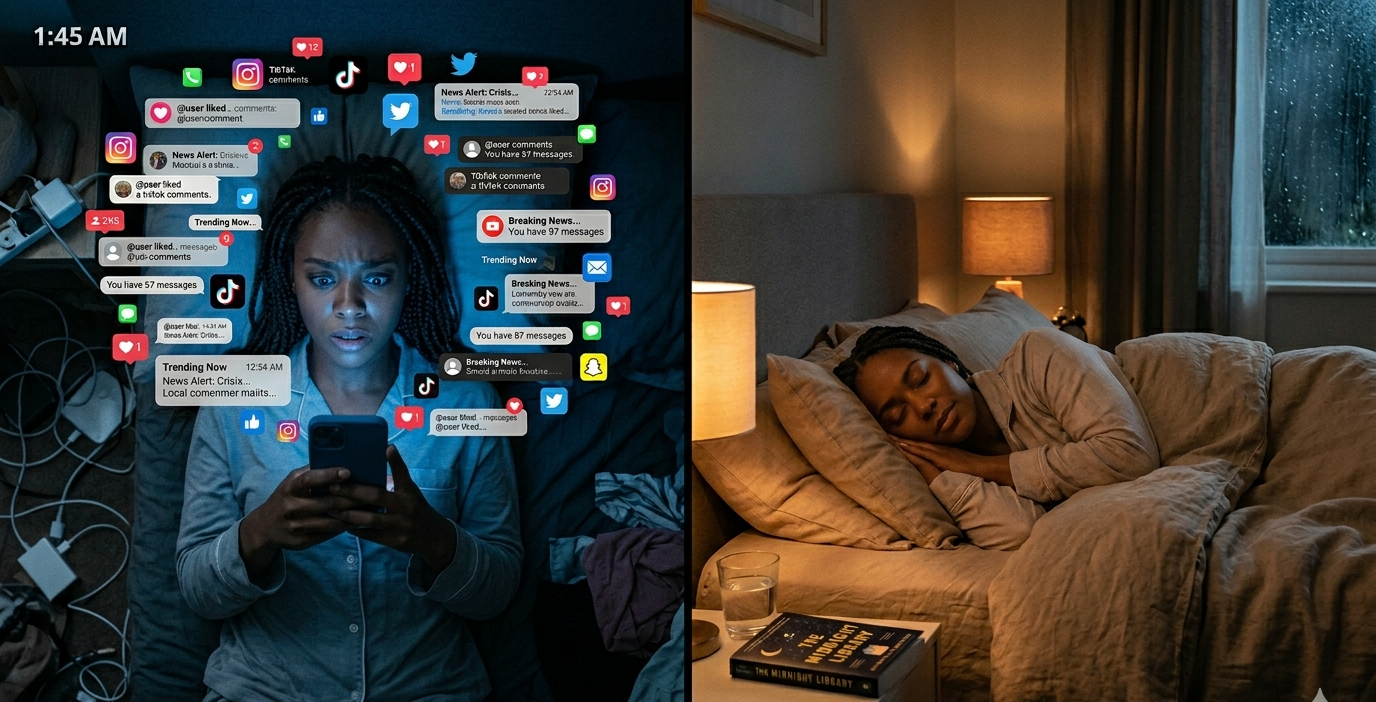
Modern life keeps our nervous systems overstimulated all day long from endless scrolling, looking at bright screens to stress, anxiety, noise, and overthinking. As a result our brains rarely get a chance to fully slow down when we want to sleep.
So when bedtime finally comes, your body is tired but your mind is still in “go mode.” This is why the secret to better sleep isn’t forcing yourself to sleep. It’s creating habits that tell your body: “You’re safe. You can relax now.”
This post may contain affiliate links. As an Amazon Associate, I earn from qualifying purchases at no extra cost to you.
If your mind races at night or you struggle to wind down before bed, these tips may help you too.
1. Stop Eating Right Before Bed

One of the biggest improvements I made was eating dinner earlier.
Going to sleep immediately after eating can leave your body focused on digestion instead of rest, making it harder to fully relax.
What helped me:
I started eating dinner at least 3 hours before bed. That simple shift made my body feel lighter, calmer, and much more ready for sleep by nighttime.
Why it works:
Your body naturally sleeps better when it’s not busy digesting a heavy meal all night.
2. Avoid Doom-Scrolling Before Sleeping

This one is HUGE.
Scrolling social media before bed may feel relaxing in the moment, but it actually overstimulates your brain right before sleep. Bright screens, endless information, stressful news, and constant notifications keep your nervous system alert when it should be winding down.
Instead of scrolling:
Try replacing your nighttime screen time with:
- Reading
- Stretching
- Calm music
- Journaling
- Deep breathing
- Quiet reflection
Even 30 minutes away from your phone before bed can make a noticeable difference in sleep quality.
3. Dim the Lights at Night
Your brain responds strongly to light.

Bright lights at night can trick your body into thinking it’s still daytime, which makes it harder to produce melatonin — the hormone responsible for sleep.
What I changed:
About an hour before bed, I started:
- Dimming my lights
- Avoiding harsh overhead lighting
- Creating a calm nighttime atmosphere
It instantly made evenings feel slower, softer, and more relaxing.
Sometimes your environment affects your sleep more than you realize.
4. Invest in the Right Mattress

A good mattress is not a luxury – it’s an investment in your health.
If your mattress is uncomfortable or unsupportive, your body stays tense throughout the night even when you’re technically “sleeping.”
I didn’t realize how much my mattress was affecting my sleep until I upgraded to one that actually supported my body properly.
Signs your mattress may be affecting your sleep:
- You wake up stiff or sore
- You constantly toss and turn
- You wake up feeling exhausted
- You struggle to get comfortable at night
Your sleep environment matters more than people think.
5. Wear Socks to Bed
This tip sounds random, but it genuinely works.
Wearing cozy socks to bed can help regulate your body temperature and improve circulation, which helps signal to your brain that it’s time to sleep.
For me, this tiny habit made a surprisingly noticeable difference – especially on restless nights. Sometimes the smallest habits create the biggest results.
6. Play White Noise or Rain Sounds
A quiet room isn’t always calming when your mind is racing. One thing that helped me tremendously was playing:
- White noise
- Rain sounds
- Soft ambient sounds
These sounds create a peaceful background that helps block distractions and gives your mind something calming to focus on.
Eventually, my brain started associating those sounds with relaxation and sleep. Now they’re part of my nightly routine.
7. Think About Your Dream Life Before Sleeping

This might be my favorite habit of all.
Instead of lying in bed replaying stress, anxiety, or worst-case scenarios, I started intentionally thinking about peaceful and positive things before sleep.
Sometimes I imagine:
- My dream home
- My future goals
- Traveling the world
- My ideal life
- Beautiful memories
- Things I’m grateful for
That small mental shift changed my nights completely.
Your mind is incredibly powerful before sleep. What you focus on during those final moments matters. Ending the day with peaceful, happy thoughts feels far better than ending it with stress and overthinking.
The Truth About Better Sleep
Most people think better sleep requires some complicated solution but often, it’s simply about creating an environment where your body and mind feel calm enough to rest.
Small habits matter:
- Eating earlier
- Staying off your phone
- Dimming the lights
- Creating comfort
- Relaxing your nervous system
- Filling your mind with peaceful thoughts
Those little choices add up. And when your sleep improves, everything improves:
- Your mood
- Your energy
- Your focus
- Your stress levels
- Your overall wellness
Sleep isn’t a luxury. It’s the foundation of feeling like yourself again.
Final Thoughts
If you’ve been struggling to sleep lately, start small. You don’t need to completely change your life overnight.
Try one or two of these habits tonight and notice how your body responds because sometimes the biggest transformations begin with the smallest nighttime routines.
😴💤